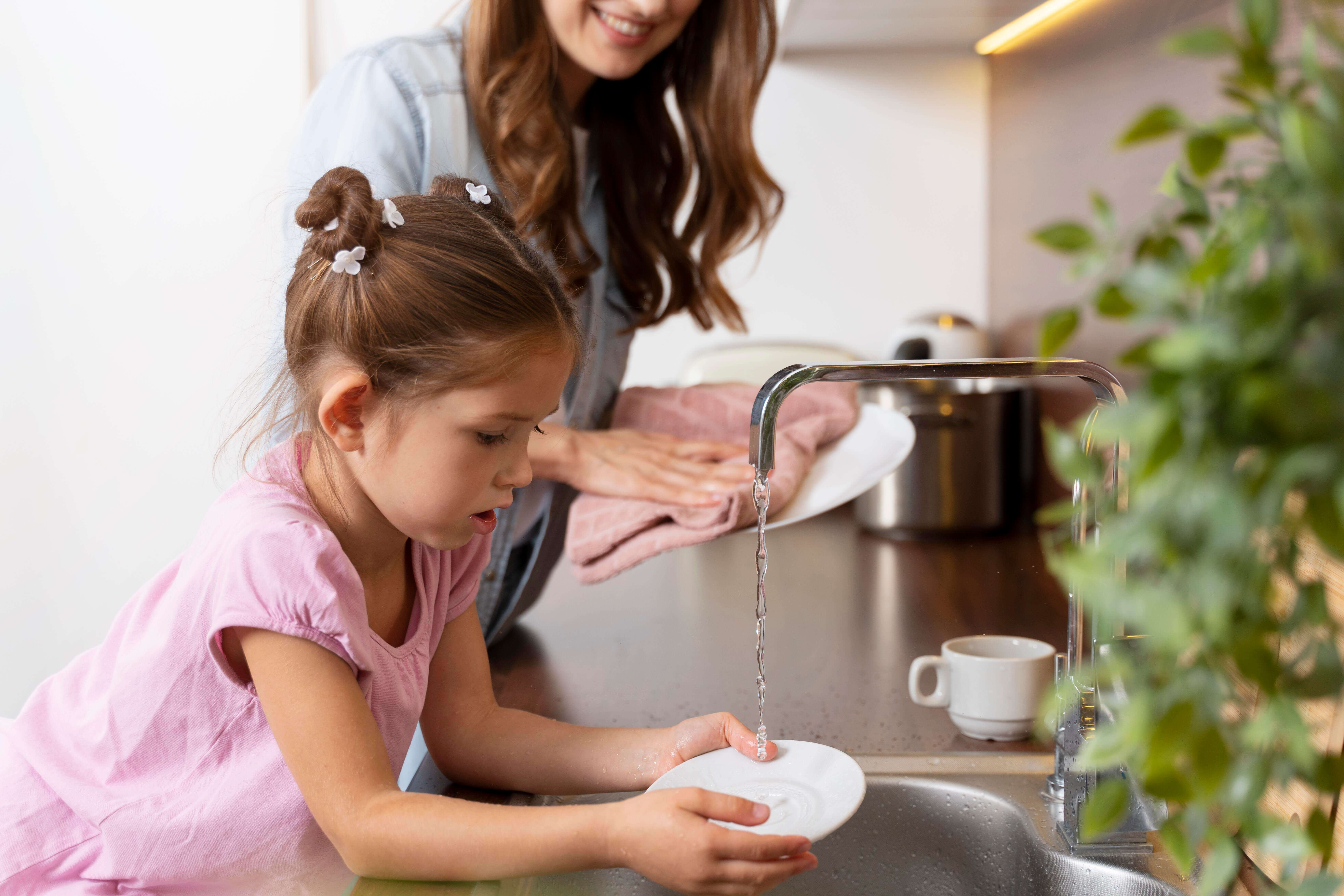
Chores can be a wonderful way to teach children responsibility, teamwork, and pride in their contributions to the family – but what's "age-appropriate" isn't always simple.
Every child develops differently. Some children love structure, others resist it. Some can manage more independence at five than others can at ten. Especially for neurodivergent kids, skills like planning, coordination, and following instructions may grow at a different pace – and that's absolutely fine.
The goal isn't perfection or ticking off boxes by age. It's finding small, achievable ways for each child to participate and feel capable.
It's Not About Age – It's About Readiness
Instead of asking "What should my child be doing at this age?" try asking "What can my child do successfully right now?"
Look for tasks that match their current strengths – and start small. Success builds motivation. A task that feels easy today lays the groundwork for confidence tomorrow.
"If you're starting later with older children who aren't yet used to helping at home, don't worry. Habits can be built any time with consistency, calm expectations, and the right motivation."
Start Where They Are – and Make It Feel Like Play
When kids are little, chores should feel like play. That's how responsibility takes root naturally.
- Turn tidy-up time into a game: "Let's race the timer and see how many toys we can put away before the bell!" (Note: This may not work for some kids who feel timers as pressure – you can try without the timer too)
- Encourage sorting activities: Blocks by colour, laundry by size, or socks by pair
- Celebrate participation, not perfection: "I love how you helped sort the Lego today!"
These early playful habits build a sense of teamwork and belonging. Over time, chores simply become what we do together.
A Flexible Guide to Chores (by Stage, Not Strict Age)
Every child's timeline is different, so treat this as inspiration rather than instruction.
📋 Chores by Development Stage
Early Years (2–4)
- Tidy toys with help
- Wipe low surfaces with a cloth
- Put dirty clothes in the laundry basket
- Feed pets with supervision
Primary Years (5–8)
- Make their bed (even if it's not perfect)
- Sort and fold laundry items
- Water plants
- Help set or clear the table
- Carry empty plates/bowls to the kitchen after meals
- Prepare simple snacks or breakfast under supervision
- Choose their outfit or set out uniform for the next day
- Tidy shoes (if you keep the family's shoes in a certain area)
Tweens (9–12)
- Empty bins
- Sweep or vacuum small areas
- Help with pet care
- Load the dishwasher
- Manage recycling
- Cook simple meals (with supervision)
- Prepare their school bags for the day
Teens (13+)
- Do their own laundry
- Clean bathrooms
- Mop floors
- Help with errands or younger siblings
Use these as gentle starting points. Adjust for attention span, ability, and interest – and always focus on progress over precision.
Linking Chores to Pocket Money and Motivation
Pocket money can be a brilliant motivator – not as payment for existing in the family, but as a way of showing how effort and contribution connect to real-world value.
The StarJar app helps children see that value clearly. As they tick off chores and earn points or pocket money, they start to understand the link between effort, reward, and responsibility.
It's simple, fair, and transparent – they can see exactly what they've earned and what's left to reach their goal. Over time, they learn both practical life skills and money sense in one place.
Building New Habits (at Any Age)
If you're coming to chores later – maybe your children have grown used to not helping or find change difficult – start small.
- Pick one task per child that's realistic and visible
- Stick with it daily until it becomes familiar
- Gradually build from there
Even if it takes weeks for the new pattern to settle, you're teaching one of life's most powerful lessons: consistency pays off.
And that's exactly what StarJar models – steady, visible progress that children can take pride in.
"Every child can contribute – some need structure, others need play, all need encouragement."
Final Encouragement
Whether you're raising toddlers or teens, the key is to start small, stay consistent, and celebrate effort.
Remember: it's not about age, it's about readiness. And it's never too late to start.
Ready to Make Chores Fun and Motivating?
Download our free printable chore list and start tracking progress with StarJar today. Make household responsibilities engaging for kids of all ages and abilities.
Start Your Free Trial.jpeg)